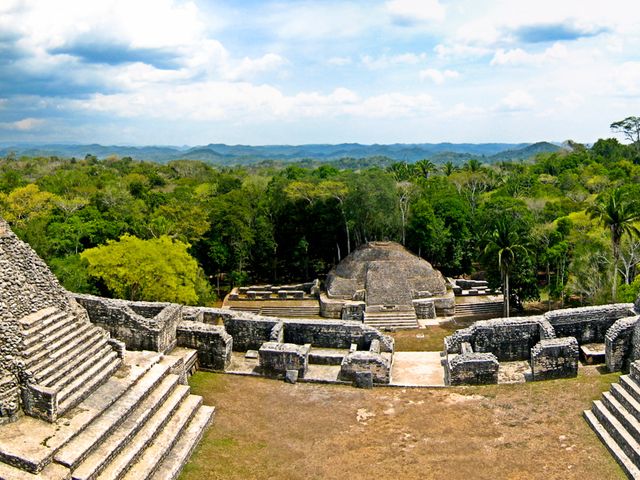
Caracol
Chiquibil Forest Reserve, Belize
Caracol is the name given to a large ancient Maya archaeological site, located in what is now the Cayo District of Belize. It rests on the Vaca Plateau at an elevation of 500 meters above sea-level, in the foothills of the Maya Mountains. Long thought to be a tertiary center, it is now known that the site was one of the most important regional political centers of the Maya Lowlands during the Classic Period.
Caracol covered approximately 200 square kilometers, covering an area much larger than present-day Belize City (the largest metropolitan area in the country) and supported more than twice the modern city's population.
The Caracol area was occupied as early as 1200 BC, yet occupation in the epicentral area was no earlier than 650 BC and lasted no later than AD 950. Caracol boasts 53 carved stone monuments (25 stelae and 28 altars), and more than 250 burials and 200 caches.
Evidence suggests that Caracol weathered the initial part of the Maya collapse. Through symbolic egalitarianism, it seems that the majority of the Late Classic population had access to ‘elite’ material goods. However, the transition to the Terminal Classic sees a shift away from symbolic egalitarianism, when the elite developed their own ceramic traditions and had access to goods no longer available to the populace.
The last recorded date at Caracol is AD 859. Structure A6 was abandoned in AD 1050, and marks the final abandonment of the site.