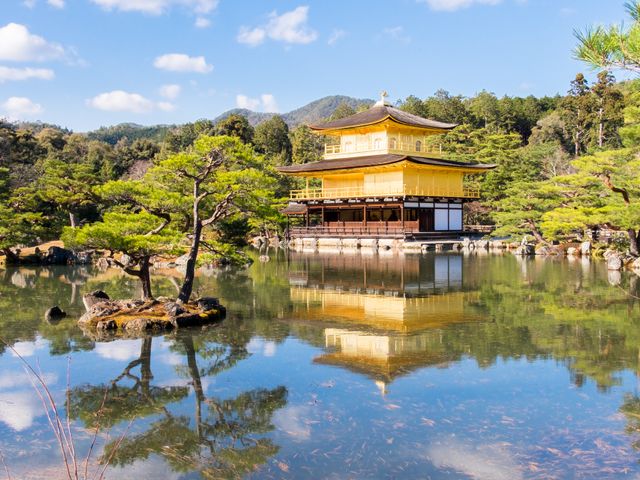
Kinkakuji
Kyoto, Japan
Kinkaku-ji ("Temple of the Golden Pavilion") is a Zen Buddhist temple in Kyoto, Japan. It is one of the most popular buildings in Japan, attracting a large number of visitors annually.
The Golden Pavilion (Kinkaku) is a three-story building on the grounds of the Rokuon-ji temple complex. The top two stories of the pavilion are covered with pure gold leaf. The pavilion functions as a shariden, housing relics of the Buddha (Buddha's Ashes). The building was an important model for Ginkaku-ji (Silver Pavilion Temple) and Shōkoku-ji, which are also located in Kyoto. When these buildings were constructed, Ashikaga Yoshimasa employed the styles used at Kinkaku-ji and even borrowed the names of its second and third floors.
The pavilion successfully incorporates three distinct styles of architecture, which are shinden, samurai and zen, specifically on each floor. Each floor of the Kinkaku uses a different architectural style.
The first floor, called The Chamber of Dharma Waters (Hou-sui-in), is rendered in shinden-zukuri style, reminiscent of the residential style of the 11th century Heian imperial aristocracy. It is evocative of the Shinden palace style. It is designed as an open space with adjacent verandas and uses natural, unpainted wood and white plaster. This helps to emphasize the surrounding landscape. The walls and fenestration also affect the views from inside the pavilion. Most of the walls are made of shutters that can vary the amount of light and air into the pavilion and change the view by controlling the shutters' heights.
The second floor, called The Tower of Sound Waves (Chou-on-dou ), is built in the style of warrior aristocrats, or buke-zukuri. On this floor, sliding wood doors and latticed windows create a feeling of impermanence. The second floor also contains a Buddha Hall and a shrine dedicated to the goddess of mercy, Kannon.
The third floor is built in traditional Chinese chán (zen) style. It is called the Cupola of the Ultimate (Kukkyou-chou). The zen typology depicts a more religious ambiance in the pavilion, as was popular during the Muromachi period.
The roof is in a thatched pyramid with shingles. The building is topped with a bronze hōō (phoenix) ornament. From the outside, viewers can see gold plating added to the upper stories of the pavilion. The gold leaf covering the upper stories hints at what is housed inside: the shrines. The outside is a reflection of the inside. The elements of nature, death, religion, are formed together to create this connection between the pavilion and outside intrusions.
The Golden Pavilion is set in a magnificent Japanese strolling garden. The location implements the idea of borrowing of scenery ("shakkei") that integrates the outside and the inside, creating an extension of the views surrounding the pavilion and connecting it with the outside world. The pavilion extends over a pond, called Kyōko-chi (Mirror Pond), that reflects the building. The pond contains 10 smaller islands. The zen typology is seen through the rock composition; the bridges and plants are arranged in a specific way to represent famous places in Chinese and Japanese literature. Vantage points and focal points were established because of the strategic placement of the pavilion to view the gardens surrounding the pavilion.
The pavilion grounds were built according to descriptions of the Western Paradise of the Buddha Amida, intending to illustrate a harmony between heaven and earth. The largest islet in the pond represents the Japanese islands. The four stones forming a straight line in the pond near the pavilion are intended to represent sailboats anchored at night, bound for the Isle of Eternal Life in Chinese mythology.